Bachelor’s Degree + MD

6-Year BS/MD Program

Earn a Bachelor of Science, Then Your MD

Earn an accredited Bachelor of Science in Health Science in just two years. Complete your first year online from home and your second year on our campus in Curaçao. Upon successful completion, receive automatic admission into the MD program.

124
US credits (248 ECTS) for your BS degree
24
months to earn your bachelor’s degree
2
degrees on one path: a BS, then your MD
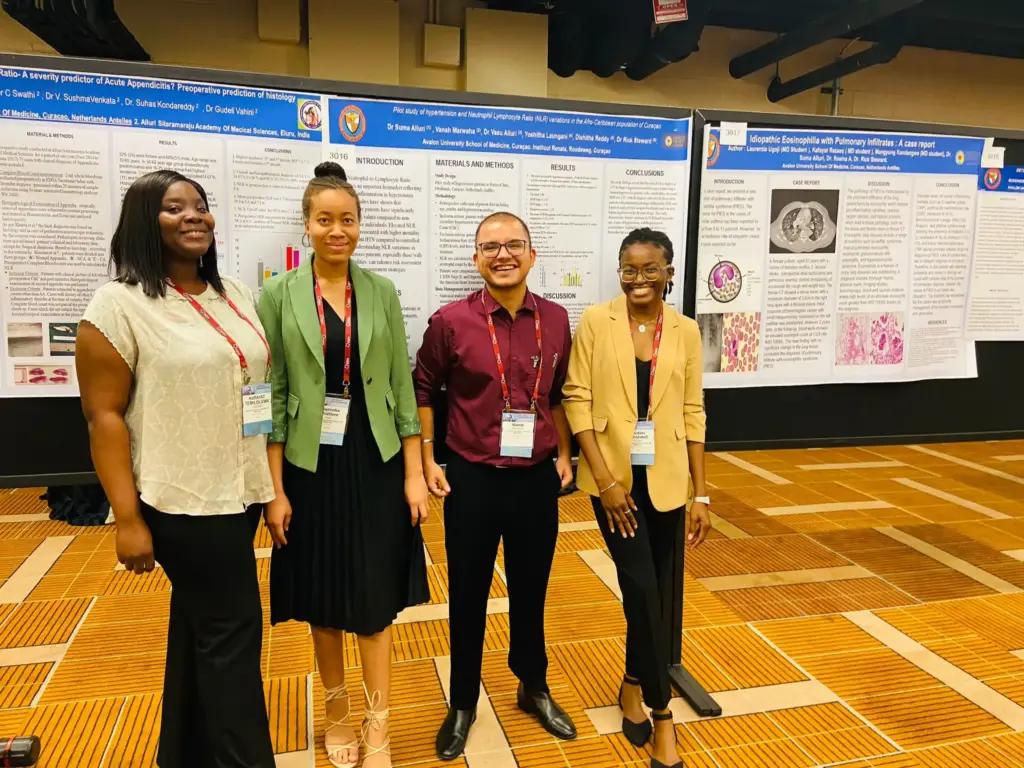
Avalon University students presenting medical research at a poster presentation

Online → Curaçao → USA

BSAccredited degree + automatic MD admission

Program Roadmap

Two Degrees, Three Stages

Begin by earning your bachelor’s degree, then continue into the MD program: preclinical sciences in Curaçao, followed by clinical rotations at U.S. teaching hospitals. Each stage has dedicated dean leadership to guide you throughout your education.

  1. Online + CuraçaoBachelor of ScienceBS 1–6 · 6 semesters (24 months)Dr. Reshma FattehDean of Bachelor of Science in Health Science
  2. In CuraçaoPreclinical SciencesMD1–MD5 · 5 semesters (20 months)Dr. Sireesha Bala A.Dean of Preclinical Sciences
  3. USMLE Step 1Pass to begin clinical rotations
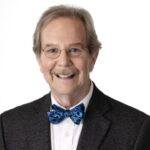
  4. In the USAClinical SciencesCM1–CM6 · 72 weeks of rotationsLanny Wilson, M.D.Dean of Clinical Sciences
  5. USMLE Step 2 & OSCEClinical knowledge and skills
  6. GraduationEarn your MD and apply to residency

How long each stage takes

  1. 24 monthsBachelor of Science3 semesters online, then 3 in Curaçao
  2. 20 monthsPreclinical SciencesMD1–MD5 in Curaçao
  3. 6 weeksIntro to Clinical MedicineAt your clinical site
  4. 72 weeksClinical SciencesCM1–CM6 in the USA

The program runs year-round, with three semesters each year. Between the preclinical and clinical stages, students take USMLE Step 1. The time needed to prepare for the exam and the start of clinical rotations may vary from student to student.

Bachelor of Science · 24 Months

Earn Your Degree, Prepare for the MD

The first two years of this program are dedicated to earning a Bachelor of Science (BS) in Health Science through an accredited, degree-granting program with a hybrid curriculum. The first year is completed online, allowing you to study from home, while the second year takes place in person at our campus in Curaçao. Students who successfully complete the program earn their BS degree and receive automatic admission into the MD program.

The curriculum includes foundational undergraduate science courses required for entry into the MD program. It is designed for high school graduates and students who have not yet met all the MD admission requirements, allowing them to build a strong foundation in the sciences while earning their bachelor’s degree.

  • Year 1 (BS 1–3): online, from home

    Complete your first three semesters online from your home country.

  • Year 2 (BS 4–6): on campus in Curaçao

    Advanced health sciences, research and your dissertation, in person on our campus.

  • A BS degree + automatic MD admission

    Graduate with your bachelor’s degree and move straight into the MD program.

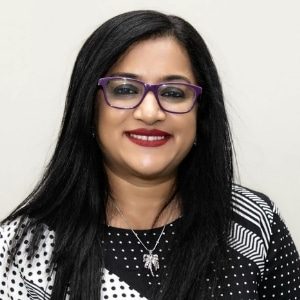
Dr. Reshma Fatteh, Dean of Bachelor of Science in Health Science

Dean of Bachelor of Science in Health Science

Your BS Program Dean

Dr. Reshma Fatteh

M.D., M.S. (Psychology), FIAMSE, FAcadMEd · Dean of Bachelor of Science in Health Science

Dr. Reshma Fatteh leads the Bachelor of Science in Health Science program, from your first online semester to your dissertation in Curaçao. A graduate of Avalon University School of Medicine with a master’s degree in psychology, she is Assistant Professor of Behavioral Sciences, chairs the Admissions Committee and also serves as Dean of Premedical Sciences.

Her teaching philosophy puts students first: every student deserves quality instruction in an active, stimulating learning environment, with frequent opportunities to act, react and interact with classmates and instructors.

  • AUSOM MD graduate
  • M.S. in Psychology
  • Dean of Premedical Sciences
  • Associate Dean of Admissions
Read her full bio

BS 1 – BS 6

Curriculum of the 6-Year BS/MD Program

Select a semester to explore its courses, US credits, and ECTS. Click on any course to view its description and recommended textbooks.

Semester 1Online

BS 1 Science Foundations

Build your foundation in English, calculus, general chemistry, and biology while studying online from your home country.

22US credits44 ECTS · 4 courses
English 1ENG101US credits: 6ECTS: 12

About this course

This course will help students write and speak with confidence. Using The Blue Book of Grammar and Punctuation, you will learn the fundamental principles of the English language, with rules and guidelines that make the language easy to understand through real-world conversational examples.

Recommended textbooks

CalculusMAT103US credits: 5ECTS: 10

About this course

Students enhance their experience with mathematical functions as they study the fundamental concepts of calculus: limiting behaviors, differential quotients and the derivative, Riemann sums and the definite integral, antiderivatives and indefinite integrals, and the Fundamental Theorem of Calculus. Students also review and extend their knowledge of trigonometry and basic analytic geometry.

The course teaches you to model situations to solve problems. In the physical and biological sciences, economics and even the social sciences, the move from a qualitative or descriptive understanding to a quantitative one is achieved through mathematics, and calculus in particular.

Recommended textbooks

General Chemistry 1CHE106US credits: 5ECTS: 10

About this course

An introduction to chemical reactions, the mole concept, properties and states of matter, atomic structure, periodic properties, chemical bonding and molecular structure. Students develop concepts and learn chemical information that they apply within a variety of chemistry-related applications, helping them make informed decisions about risks and benefits and interpret the information they encounter.

Recommended textbooks

Biology 1BIO108US credits: 6ECTS: 12

About this course

This course covers the biological facts and functional organization of life on earth, building a foundation for later studies, and is an essential prerequisite to Histology and Cell Biology. It outlines basic biological principles, cycles and processes, with emphasis on learning, understanding and using key biological concepts and the scientific method.

Modern biology is not only about assimilating facts: learning to use that information for problem-solving, posing hypotheses and interpreting experimental results is critical to understanding biology as a science.

Recommended textbooks

BS 1 total22 US credits · 44 ECTS

Semester 2Online

BS 2 Core Sciences

Continue building your foundation in English, chemistry, and biology while beginning physics, all through online study from home.

23US credits46 ECTS · 4 courses
English 2ENG102US credits: 6ECTS: 12

About this course

This course combines the grammar and punctuation learned in English 1 with literature related directly to health care, using The Blue Book of Grammar and Punctuation and The Social Medicine Reader. The Reader surveys the challenges facing today’s health care providers, patients and caregivers through narratives of illness, commentaries by physicians and debates about complex medical cases.

Recommended textbooks

General Chemistry 2CHE107US credits: 5ECTS: 10

About this course

The fundamental principles of General Chemistry 1 are explored in greater depth and new topics are introduced, including molecular orbital theory, intermolecular forces, polymers, semiconductors and superconductors, kinetics and chemical equilibrium. Students learn the characteristics of liquids and solids, including phase diagrams and spectrometry, and balance oxidation-reduction equations and solve redox titration problems.

By the end of the course, students can apply scientific models to predict the composition, structure, properties and reactivity of matter, and solve qualitative and quantitative problems using logic and original thought.

Recommended textbooks

Biology 2BIO109US credits: 6ECTS: 12

About this course

A continuation of Biology 1 that surveys topics fundamental to all living organisms, with a specific focus on human biology. The course covers organisms in the Domains Archaea and Bacteria and, more extensively, the four kingdoms of the Domain Eukarya, with special attention to higher animal organization: from tissues to organs and organ systems, how these compare in invertebrates and higher vertebrates, and how these systems work in humans.

Recommended textbooks

Physics 1PHY105US credits: 6ECTS: 12

About this course

An introduction to basic physics. Students understand the important conceptual models used in the core areas of physics and demonstrate their ability to draw logical conclusions from them. The course emphasizes the fundamental laws of nature on which all science is based and the role of physics in today’s society and technology; developing a conceptual understanding of physics principles is its primary goal.

Recommended textbooks

BS 2 total23 US credits · 46 ECTS

Semester 3Online

BS 3 Toward Medicine

Continue with physics and organic chemistry while beginning your health sciences coursework, including epidemiology and biostatistics, ethics and communication, and medical terminology.

22US credits44 ECTS · 5 courses
Physics 2PHY105US credits: 6ECTS: 12

About this course

This course completes the introductory physics that began in Physics 1 with a broad survey of classical and modern physics, addressing electricity and magnetism and concluding with an introduction to quantum physics. Topics include thermodynamics, waves and sound, linear superposition and interference phenomena, electric forces, fields and circuits, magnetic forces and fields, electromagnetic waves, the reflection of light, special relativity, particles and waves, nuclear physics and nuclear energy, and elementary particles.

Recommended textbooks

Organic ChemistryOCH201US credits: 6ECTS: 12

About this course

A unified overview of fundamental organic chemistry. Students who complete the course gain an integrated understanding of molecular architecture, molecular transformations, reaction energetics and mechanisms, synthetic strategy and structure determination.

Recommended textbooks

Introduction to Epidemiology and BiostatisticsPBH202US credits: 4ECTS: 8

About this course

A foundation in epidemiology and biostatistics, two essential components of public health research. Students learn the basic principles of epidemiology, including the distribution and determinants of disease, risk factors and measures of disease occurrence, and the application of statistical methods to health research, including study design, data analysis and interpretation of results.

Students learn to critically appraise published research and apply epidemiological and biostatistical concepts to real-world health problems, becoming competent consumers of health research who understand the scientific basis of public health interventions.

Recommended textbooks

Ethics and Communication Skills in HealthcareCOM203US credits: 3ECTS: 6

About this course

Students learn to make correct ethical decisions and discuss them readily and accurately using ethical terminology; the course also covers the ethics portion of behavioral sciences. It builds communication skills for healthcare: effective techniques for communicating with patients, families and healthcare professionals, the impact of cultural, linguistic and technological factors, and empathetic, patient-centered communication.

Recommended textbooks

Medical TerminologyCOM204US credits: 3ECTS: 6

About this course

This course builds familiarity with medical terms while reviewing basic anatomy and physiology. Students learn the building blocks of medical terminology (prefixes, suffixes, roots and combining forms) along with pronunciation, spelling and the definitions of terms related to the body systems, and gain a basic understanding of anatomical structures, medical processes and procedures, and diseases.

Recommended textbooks

BS 3 total22 US credits · 44 ECTS

Semester 4In person · Curaçao

BS 4 Medical Foundations

Begin your first on-campus semester in Curaçao, studying anatomy and physiology, histology, biochemistry and nutrition, behavioral science, and completing your first research project.

23US credits46 ECTS · 5 courses
Introduction to Anatomy and PhysiologyHSC302US credits: 6ECTS: 12

About this course

This course builds a solid understanding of the structures that make up the human body and their functions, from cells and tissues to organs and organ systems, and how anatomy and physiology relate to human health. Topics include the musculoskeletal, nervous, cardiovascular, respiratory, digestive, urinary and reproductive systems and how these systems work together, essential groundwork for further health science studies and clinical practice.

Recommended textbooks

Fundamentals of HistologyHSC303US credits: 5ECTS: 10

About this course

The structure and function of the cell and extracellular matrix as the basic building blocks of tissues and organs. The course presents how cells specialize and interact to form tissues, and how cells and tissues are structurally and functionally linked in organs. Lectures relate cell, tissue and organ structure to function, while laboratory studies emphasize the microscopic recognition of tissues and organs.

Recommended textbooks

Biochemistry and NutritionBCH301US credits: 5ECTS: 10

About this course

An introduction to biological molecules (carbohydrates, peptides and proteins, lipids and nucleic acids) from a molecular perspective, and the chemical processes that occur in living organisms. Through lectures, laboratory sessions and case studies, students learn the fundamental principles of biochemistry, metabolism and the regulation of biochemical pathways, and their relevance to human health and disease.

Recommended textbooks

Behavior ScienceHSC402US credits: 5ECTS: 10

About this course

An introduction to the scientific study of human nature. Students learn how psychologists ask questions from different perspectives (the relation between brain and behavior, perception, learning and thinking, development, social behavior and personality, psychopathology and psychotherapy), the methods they use to answer them, and many important findings and theoretical approaches in the field.

Recommended textbooks

Health Informatics and Research Project IRES305US credits: 2ECTS: 4

About this course

Health informatics introduces the principles and practice of health information technology: electronic health records, telemedicine and mobile health applications used to improve patient care, population health management and healthcare administration, with the key standards and the ethical and legal considerations of managing health data.

Research Project I covers the fundamentals of research methodology and design in healthcare: research ethics, data collection and analysis, formulating research questions, designing a study and analyzing data with appropriate statistical methods, and communicating findings in writing and orally.

Recommended textbooks

BS 4 total23 US credits · 46 ECTS

Premed coursework complete after BS 4: 90 US credits · 180 ECTS

Semester 5In person · Curaçao

BS 5 Health Sciences

Study microbiology and immunology, neuroscience, human embryology, and genetics while completing your second research project and participating in community service with real patients.

18US credits36 ECTS · 5 courses
Introduction to Microbiology and ImmunologyHSC404US credits: 6ECTS: 12

About this course

The fundamental principles of infectious diseases as they impact human medicine. Students learn the pathogenesis, diagnosis, treatment and prevention of infections caused by bacteria, viruses, fungi and parasites; the molecular and cellular mechanisms of host defense, including the structure and function of the immune system and immunological diagnostics; and the principles of vaccination, antibiotics and antimicrobial resistance, through lectures, laboratory sessions and interactive discussions.

Recommended textbooks

NeuroscienceHSC403US credits: 4ECTS: 8

About this course

An introduction to the structure and function of the brain and nervous system and its relationship to health and disease. Topics include neuroanatomy and neural development, the brain and spinal cord, neuronal signaling and plasticity, sensory and motor systems, the autonomic nervous system, learning and memory, and emotion and motivation. Students also learn the neurological basis of disorders such as Alzheimer’s, Parkinson’s and epilepsy, the drugs used to manage them, and the ethics of neuroscience research.

Recommended textbooks

Human Embryology and GeneticsHSC304US credits: 4ECTS: 8

About this course

The development of the human embryo and the molecular and genetic mechanisms behind it. Through lectures, lab sessions and case studies, students learn the stages of embryonic development and the genetic and environmental factors that can lead to congenital abnormalities and developmental disorders, and explore the ethical, legal and social implications of prenatal diagnosis and genetic counseling.

Recommended textbooks

Health Informatics and Research Project IIRES306US credits: 2ECTS: 4

About this course

Building on Research Project I, this course focuses on more advanced research methods: designing and conducting observational studies, randomized controlled trials and quasi-experimental designs, and applying advanced statistical methods such as regression analysis, survival analysis and meta-analysis to real-world healthcare problems, while critically evaluating studies in the healthcare literature.

Recommended textbooks

Community ServicesPBH401US credits: 2ECTS: 4

About this course

A practical course in patient-centered interviewing and interpersonal skills with real patients, focused on history-taking and communication. Students assist with patient activities and physical therapy, take histories, give health care instructions and learn to present cases, while building the communication skills physicians need with supervisors, colleagues, patients and families. The course also explores the social determinants of health, access to care, cultural competence and how to identify underserved and special-needs populations.

BS 5 total18 US credits · 36 ECTS

Semester 6In person · Curaçao

BS 6 Capstone

Study the essentials of pharmacology and basic pathophysiology while completing your dissertation: an individual thesis focused on a health sciences topic.

16US credits32 ECTS · 3 courses
Essentials of PharmacologyHSC405US credits: 6ECTS: 12

About this course

One of the foundational courses in the study of medicine: the principles of pharmacology and the mechanisms of drug action. Through lectures, case studies and hands-on activities, students learn drug classifications, absorption, distribution, metabolism and elimination, therapeutic and adverse effects, pharmacokinetics and pharmacodynamics, drug interactions and drug development, and key principles across cardiovascular, respiratory, gastrointestinal, endocrine and central nervous system disorders.

Recommended textbooks

Basic PathophysiologyHSC406US credits: 6ECTS: 12

About this course

The functional changes that occur in the body during disease: the causes, progression and clinical manifestations of cardiovascular, respiratory, gastrointestinal, endocrine and central nervous system disorders, and the physiological and biochemical alterations in organs and systems that drive disease. The course develops critical thinking and problem-solving skills and builds a solid foundation in the mechanisms of disease for clinical practice.

Recommended textbooks

DissertationDIS409US credits: 4ECTS: 8

About this course

The capstone course. Students apply what they learned in Introduction to Epidemiology and Biostatistics (BS 3) and Health Informatics and Research Projects I and II (BS 4 and BS 5): each student chooses a topic in BS 4 or BS 5 and writes an individual thesis, completed in BS 6. The thesis demonstrates the ability to apply the knowledge and skills gained in earlier semesters while deepening understanding of a health sciences topic.

BS 6 total16 US credits · 32 ECTS

Bachelor of Science complete: 124 US credits · 248 ECTS

  • 6 semesters
  • 26 courses
  • 124 US credits
  • 248 ECTS
  • BS degree complete

Non-mandatory Electives

Optional courses you can take alongside the required BS curriculum.

Foundational Principles of Health Professions EducationEDU407US credits: 2ECTS: 4
Basic Surgical SkillsHSC408US credits: 2ECTS: 4
How to read our course codesEvery BS course code has three parts, for example HSC402.
  1. HSCPrefix (3 letters)The subject area
  2. 4Course level (1 digit)1 for 100-level, 2 for 200-level, and so on
  3. 02Course sequence (2 digits)The course’s unique number within that level

Subject prefixes

  • ENGEnglish
  • MATMath
  • PHYPhysics
  • BIOBiological sciences
  • CHE / OCH / BCHChemistry
  • COMCommunication
  • PBHPublic health
  • HSCHealth sciences
  • RESResearch
  • EDUEducation
  • DISDissertation

Course levels

001–099
Non-credit and credit courses, and courses offered to non-matriculated students
100–199
Introductory, elementary and general education courses for first-year students, with few if any prerequisites
200–299
Lower-level undergraduate courses that build on 100-level material and may have prerequisites
300–399
Upper-level undergraduate courses and courses for majors, with significant prerequisites
400–499
Advanced upper-level courses, including seminars, independent study and thesis work

Textbooks & Study Resources

Each course above includes a list of recommended textbooks. We encourage you to purchase the books whenever possible, as they can be valuable resources to support your learning and studies.

  • Newer editions are fineIf the edition listed is unavailable but a newer one exists, you may buy the newer edition.
  • PDF versions welcomeIf a downloadable PDF version is available online, you may purchase it instead.
  • Can’t get the books?Your professors also provide PowerPoints and online resources as study material.
  • Shipping to CuraçaoAmazon.com does not deliver to Curaçao. Listed prices are for new books; used or rental copies may cost less.

Admissions

Academic Requirements

The 6-Year BS/MD Program is designed for students who want to earn a bachelor’s degree before continuing into medical school. You may be eligible if you meet either of the following criteria:

  1. High school diploma

    You’ve graduated from high school and want to begin your path to medicine right away.

  2. or

    Not yet eligible for the MD program

    You have some college coursework but haven’t fully met the requirements of our MD program.

Don’t need a bachelor’s degree? The 5-Year Premed/MD Program covers the same MD prerequisites in 16 months. Compare the 5-Year Premed/MD

Every MD Prerequisite, Covered

  • General Biology or Life SciencesBiology 1 & 2
  • General/Inorganic ChemistryGeneral Chemistry 1 & 2
  • Biochemistry/Organic ChemistryOrganic Chemistry · Biochemistry and Nutrition
  • PhysicsPhysics 1 & 2
  • EnglishEnglish 1 & 2
  • Precalculus/CalculusCalculus
  • Humanities or Social SciencesBehavior Science · Ethics and Communication Skills

The BS curriculum incorporates the prerequisite courses required for the MD program.

After Your BS

Continue Straight Into the MD Program

Successfully complete the BS program and receive automatic admission into our MD program, which begins on our campus in Curaçao. From there, your journey follows the same path as students in our 4-Year MD Program: preclinical sciences in Curaçao, followed by clinical rotations in the United States. Each stage is guided by its own dean.

MD1 – MD5 · Curaçao

Preclinical Sciences

The first 20 months of medical school take place on our campus in Curaçao. Basic sciences are taught through integrated, organ-system courses, with clinical skills, problem-based learning, and research incorporated throughout the curriculum. The fifth semester (MD5) is dedicated entirely to preparation for the USMLE Step 1 exam.

  • 5semesters
  • 113credit hours
  • 20months
Led byDr. Sireesha Bala A.Dean of Preclinical Sciences
Explore the preclinical curriculum
Pass USMLE Step 1

CM1 – CM6 · USA

Clinical Sciences

Apply your knowledge in hospital settings under the direct supervision of our faculty physicians. Complete 72 weeks of clinical rotations at ACGME-approved U.S. teaching hospitals, including 48 weeks of core rotations and 24 weeks of electives.

  • 72weeks
  • 48core weeks
  • 24elective weeks
Led byLanny Wilson, M.D.Dean of Clinical Sciences
Explore clinical rotations

Career Paths

Where a BS in Health Science Can Take You

While the BS in Health Science provides a pathway into our MD program, it can also open doors to other opportunities in healthcare. Graduates can pursue further education or explore careers in areas such as:

  • Medicine (MD)

    Continue straight into our MD program with automatic admission and become a physician who diagnoses and treats patients.

  • Public Health

    With an MPH or related degree, work in health promotion, disease prevention, community education and health policy.

  • Healthcare Management

    Manage healthcare facilities, departments and services in hospitals, clinics and health organizations.

  • Nursing

    Become a registered nurse, or advance to nurse practitioner, educator or administrator roles.

  • Health Education

    Design and run programs that promote healthy lifestyles in schools, communities and health organizations.

  • Clinical Research

    Plan, coordinate and manage clinical trials and research studies as a clinical research coordinator.

  • Occupational & Physical Therapy

    Help people improve their physical well-being and quality of life through therapy.

  • Health Information Management

    Oversee the organization and security of patient data in healthcare facilities.

  • Biotech & Pharmaceuticals

    Work in research, development, sales or marketing of healthcare products.

  • Healthcare Consulting

    Advise healthcare organizations, governments and companies on health-related issues.

  • Epidemiology & Health Informatics

    Study disease patterns, analyze health data and use technology to improve care.

Many of these paths involve further study, such as a master’s degree, after your BS.

FAQ

Questions About the 6-Year Program

Quick answers about the BS degree, admission to the MD and who leads each stage.

Still have questions?

Our admissions team can help you choose the right program and plan your start.

Contact Admissions

What is the 6-Year BS/MD Program?

It is Avalon University School of Medicine’s path for high school graduates who want a bachelor’s degree on their way to becoming a physician. You first earn an accredited Bachelor of Science in Health Science in two years (six semesters, 124 US credits), then continue directly into our MD program with automatic admission: five semesters of preclinical sciences in Curaçao and 72 weeks of clinical rotations at U.S. teaching hospitals.

Is the BS degree accredited?

Yes. The BS program is an accredited, degree-granting program. Students who successfully complete it are granted a Bachelor of Science degree before they begin the MD program.

Can I study online?

Yes, for the first year. BS 1, 2 and 3 are completed online, so you can study from your home country. BS 4, 5 and 6, the second year, are completed in person at our campus in Curaçao.

Do I have to apply separately to the MD program?

No. Students who successfully complete the BS program are granted their degree and gain automatic admission into our MD program.

How is it different from the 5-Year Premed/MD Program?

Both begin with the same three online semesters and a fourth on campus, covering every MD prerequisite (90 US credits). The premed program is non-degree and ends there. The BS program continues for two more semesters in Curaçao, adding microbiology and immunology, neuroscience, embryology and genetics, pharmacology, pathophysiology, research, community service and a dissertation, and awards a Bachelor of Science degree.

What does ECTS mean?

ECTS (European Credit Transfer and Accumulation System) credits are listed next to US credits for every course. In this program each US credit equals two ECTS, so the full BS is 124 US credits, or 248 ECTS.

Who leads each stage of the program?

Each stage has its own dean. Dr. Reshma Fatteh, Dean of Bachelor of Science in Health Science, leads the BS program (BS 1–6). Dr. Sireesha Bala A., Dean of Preclinical Sciences, leads the preclinical sciences (MD1–MD5) in Curaçao. Dr. Lanny Wilson, Dean of Clinical Sciences, leads the clinical rotations (CM1–CM6) in the United States.

What can I do with a BS in Health Science?

Most students continue into our MD program. The degree also prepares you for further study and careers in fields such as public health, healthcare management, nursing, clinical research, health information management and the pharmaceutical industry.

How long does the whole program take?

About six years, or 17 semesters: six BS semesters (24 months), five preclinical semesters in Curaçao (20 months) and six semesters of clinical rotations in the United States (72 weeks).

Earn Your Bachelor’s, Then Your MD

One year online from home, one year on campus in Curaçao, a Bachelor of Science degree, then straight into the MD. Take the first step toward becoming a physician at Avalon University School of Medicine.